My shopping cart
Your cart is currently empty.
Continue ShoppingLast Updated: October 12, 2026
Choosing the right terrazzo supplier makes the difference between a project that runs smoothly and one that stalls. You need more than product availability: reliability, technical support, and a supplier who understands contractor timelines.
The best terrazzo suppliers for contractors deliver three things: both poured-in-place systems and terrazzo tile from one partner, accurate quotes without endless back-and-forths, and staff who understand installation challenges rather than reading from a catalog.
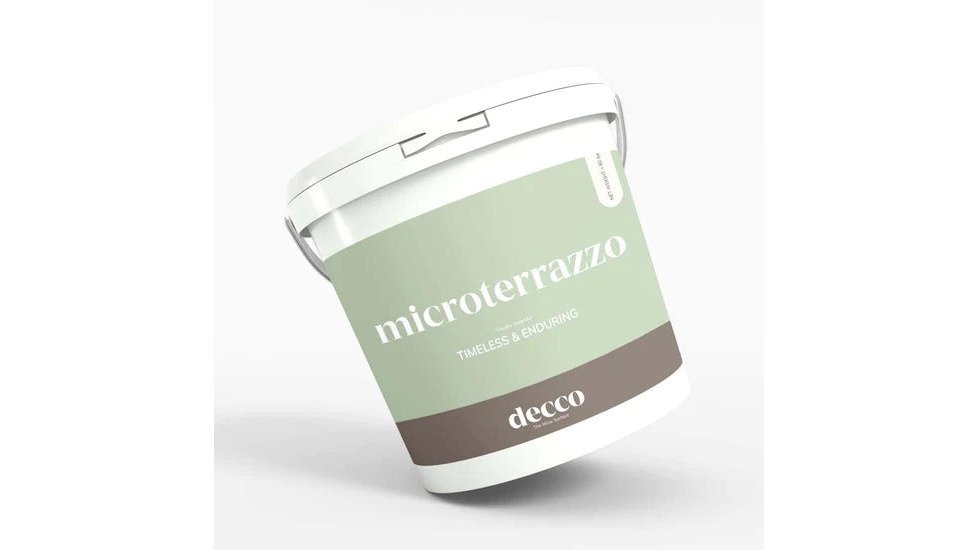
DF Studio NYC carries Velosit SC 244 rapid screed systems, DECCO MicroTerrazzo for decorative finishes, and the full range of divider strips and expansion joints contractors need.

Look for suppliers who stock specialty items like terrazzo divider strips and Pro-Edge tile trims in multiple finishes. These transition pieces get overlooked in early planning, then become critical path items once installation begins.
A solid quote is about transparency and whether the supplier understands your project scope, not just price.

When requesting quotes on terrazzo flooring cost per square foot, demand these specifics: total square footage, application thickness, aggregate type and density, finish specification, and delivery schedule. A vague quote ("best terrazzo suppliers for contractors pricing available upon request") means the supplier doesn't have their costs sorted.
Ask directly about minimum order quantities. DF Studio NYC stocks smaller quantities of DECCO MicroTerrazzo and Velosit SC 244 screed systems for crews not ordering in bulk. If your quote comes back with a 50-bag minimum when you need 15, that supplier isn't built for your scale.
Clarify shipping costs upfront. Heavy materials like concrete and terrazzo systems add real weight to invoices, so request all-in pricing or a detailed freight estimate based on your project location and order size.
| Quote Element | What to Verify | Red Flag |
|---|---|---|
| Per-square-foot pricing | Breaks down by material and labor | Generic "call for pricing" |
| Minimum order quantity | Matches your project size | Minimums that force overbuy |
| Delivery timeline | Specific date, not "3-5 business days" | Vague or delayed delivery |
| Freight costs | Included or clearly separated | Hidden fees added later |
| Technical specs | Includes product standards (EN 13813) | Missing performance data |
Request samples if you haven't worked with the supplier before. Velosit SC 244 meets EN 13813 CT-C50-F7 standards.
Poured-in-place terrazzo is the backbone of most commercial and high-end residential work, but it is a family of systems that differ by binder, aggregate, thickness, and finish. A contractor-focused supplier should walk you through the trade-offs below before you commit to a spec.
Binder type. The two dominant families are cementitious (Portland cement or modified cement binders) and resin-based (epoxy, polyacrylate, or polyester). Cementitious systems suit large commercial floors and exterior or wet areas and tolerate slab moisture vapor better. Resin-based systems cure faster and bond to more substrates, but are more sensitive to moisture and temperature.
System thickness and build-up. Terrazzo is specified in three bands: standard poured-in-place at roughly 3/8 inch, thin-set or bonded at roughly 1/4 inch, and monolithic or sand-cushion at 1/2 inch or more.
Aggregate. Marble chips remain the default for classic terrazzo; granite, quartz, glass, recycled glass, and shell are common alternatives. Aggregate size (typically fine chips up to 3/8 inch or larger) controls visual density and grind depth, and larger aggregate usually means a thicker system and more polishing passes.
Finish. Polished terrazzo shows full aggregate detail and a high-gloss surface, but has the lowest coefficient of friction (COF) and is the most demanding to maintain. Honed sits in the middle; matte or brushed offers the best slip resistance and is often specified for commercial kitchens, restrooms, and high-traffic public areas.
Divider strips and control joints. Divider strips define layout, control cracking, and separate color zones. Zinc, brass, and plastic are standard, and the profile must match system thickness. Expansion and control joints are separate and required at specified intervals on large pours.

Cure and schedule. Traditional cementitious terrazzo needs days of curing before grinding and polishing, and moisture-sensitive coverings can't go down until the slab dries to spec. Rapid-screed and modified systems compress that window but change the mixing, placement, and finishing sequence.
Substrate and site conditions. Poured-in-place terrazzo is unforgiving of a bad substrate. Flatness tolerances, moisture vapor emission rates, and surface prep requirements come from the manufacturer, not the installer. A supplier who can't produce a written substrate prep guide will leave you holding the callback.
Terrazzo flooring cost per square foot varies by system type, finish complexity, and whether you're doing poured-in-place or tile installation. Understanding the cost drivers prevents budget surprises.
Poured-in-place systems using Velosit SC 244 screed are available. Divider strips and expansion joints add cost, but they're essential for cracking control on large areas, so they're not optional.
DECCO MicroTerrazzo systems offer decorative finishes.
Terrazzo tile suppliers offer a middle ground: pre-cast tile costs more upfront than poured systems but eliminates on-site curing time, and faster installation can offset material cost on tight schedules.
Request quotes that itemize material, labor, and finishing separately. DF Studio NYC prices Velosit SC 244 at $49.99 per unit.
Velosit SC 244 Concrete & Terrazzo screed Systems →
Don't forget finishing costs. Polishing terrazzo to a high-gloss finish requires professional equipment and expertise. The WerkMaster Miroir system, used by many contractors for stone and terrazzo polishing, costs around $6,495, so factor in buying, renting, or outsourcing to a specialist.
Terrazzo tile is the pre-cast alternative to poured-in-place systems, solving three contractor problems: no on-site mixing, no curing window, and a predictable install sequence.
Tile format and thickness. Standard modular sizes are 12x12, 18x18, and 24x24 inches, with 24x24 the default for large commercial floors because it reduces grout joint count and install labor.
Aggregate and color. Standard offerings cluster around earth tones (grays, taupes, blacks) with marble or granite aggregate. Custom color mixes match an existing floor or designer's palette but usually carry a minimum square footage and longer lead time.
Finish and slip resistance. Polished tile shows full aggregate detail and a high-gloss surface; honed is more subtle with a higher coefficient of friction; brushed or textured offers the best grip and is often specified for commercial kitchens, restrooms, and exterior-adjacent spaces.
Edge profile and trim. Square edges give tight joints; beveled or eased edges hide minor lippage. Matching trim pieces, base, and stair treads should come from the same manufacturer and production run to avoid color mismatch.
Samples and mockups. A serious tile supplier sends physical samples on request and supports a jobsite mockup, the only reliable way to confirm aggregate appearance, grout color, and finish under actual project lighting.
Technical submittals. Commercial projects require product data sheets, safety data sheets, test reports, and often a tile sample. A supplier who turns submittals around in a few business days keeps your schedule intact; one who can't will delay the order release.
Lead times and availability. Stock tile ships in days; custom runs commonly take four to six weeks or longer. Confirm whether the quoted lead time runs from order receipt or submittal approval, since the two can differ by weeks.
Freight and delivery. Terrazzo tile is heavy, and freight is a real line item. Ask whether the supplier ships per pallet or per order, whether liftgate and inside delivery are included, and whether pricing is FOB origin or delivered.
Trade accounts and volume pricing. Most tile suppliers offer trade accounts with net terms, volume tiers, and dedicated account managers. Ask about volume break points, whether unopened material can be returned, and how warranty claims are handled. A written trade agreement beats a verbal discount.
The difference between a good supplier and a great one is technical support when problems arise. Poured-in-place systems require knowledge of substrate prep, curing conditions, and finishing sequences; tile installations demand thin-set compatibility and grout selection expertise.
DF Studio NYC provides installation guidance on Velosit SC 244 systems.
For DECCO MicroTerrazzo projects, we offer guidance.
Finishing equipment matters too. Contractors often invest in or rent machines like the WerkMaster Miroir for stone and terrazzo polishing, or the Werkmaster Colossos for aggressive surface prep. These tools require knowledge of technique, grit progression, and wet versus dry methods, and suppliers who understand equipment capabilities help contractors decide between rental and purchase.
Polishing pads like the 3" EcoFirm wet and dry resin pads (grits 50G to 400G) or 4" sponge fiber pads are essential finishing supplies. Grit progression, starting coarse for scratch removal, moving through medium grits for refinement, and finishing fine for gloss, is where technical knowledge becomes money in the contractor's pocket. A supplier who stocks the full range and explains progression protocols earns repeat business.
Contractors should prioritize suppliers offering product quality, technical support, reliable delivery, competitive pricing, and a comprehensive product range. Verify that the supplier stocks both poured-in-place terrazzo systems and tile options, provides detailed product documentation, and has experience working with professional contractors. Check whether they offer installation guidance, can handle custom orders, and maintain consistent inventory. A supplier familiar with commercial and residential terrazzo applications will better understand your project requirements.
Terrazzo flooring costs vary based on system type, finish complexity, and installation method. Poured-in-place terrazzo typically ranges from $8 to $15 per square foot for materials, while terrazzo tile products may vary depending on aggregate selection and finish. Custom colors, specialized aggregates, and decorative patterns increase costs. Request detailed quotes from your supplier that itemize material costs, any minimum order requirements, and shipping expenses. Always factor in labor and installation support when budgeting for a complete project.
A complete terrazzo supplier quote should include unit pricing per square foot or per bag, total material cost for your project size, minimum order quantities, delivery timelines, shipping costs, available colors and finishes, technical data sheets, and installation support resources. Ask whether the supplier offers sample packs, custom aggregate options, and whether they can provide guidance on substrate preparation. Clarify payment terms, return policies, and what technical assistance is available if issues arise during installation.
Contractors can source poured-in-place terrazzo systems, pre-cast terrazzo tile, microterrazzo finishes, divider strips and expansion joints, densifiers and sealers, polishing pads and equipment, and specialized installation accessories. Poured-in-place systems offer customization and seamless coverage, while terrazzo tile provides modular installation flexibility. Complementary products like divider strips, expansion joints, and polishing equipment ensure complete project support. Verify that your supplier stocks the specific product types your project requires.
Many professional terrazzo suppliers offer technical guidance, installation documentation, and customer support to help contractors succeed. Support may include product data sheets, installation guides, application recommendations, and troubleshooting assistance. Some suppliers provide direct access to technical experts who can answer questions about substrate preparation, curing times, and finishing techniques. Ask your supplier whether they offer on-site consultation, training resources, or connections to specialty contractors if you need additional support for complex projects.
Finding the best terrazzo suppliers for contractors comes down to three things: product depth, quote transparency, and genuine technical support. DF Studio NYC delivers all three. We stock rapid-cure screed systems like Velosit SC 244, custom decorative options through DECCO MicroTerrazzo, and the full range of finishing supplies and equipment contractors need. Request a quote today and experience the difference a supplier who actually understands your work can make.