My shopping cart
Your cart is currently empty.
Continue ShoppingLast Updated: October 9, 2026
Choosing between aluminum vs timber european window frames means choosing between two approaches to thermal performance, durability, and aesthetics. At DF Studio NYC, we help contractors and homeowners decide.
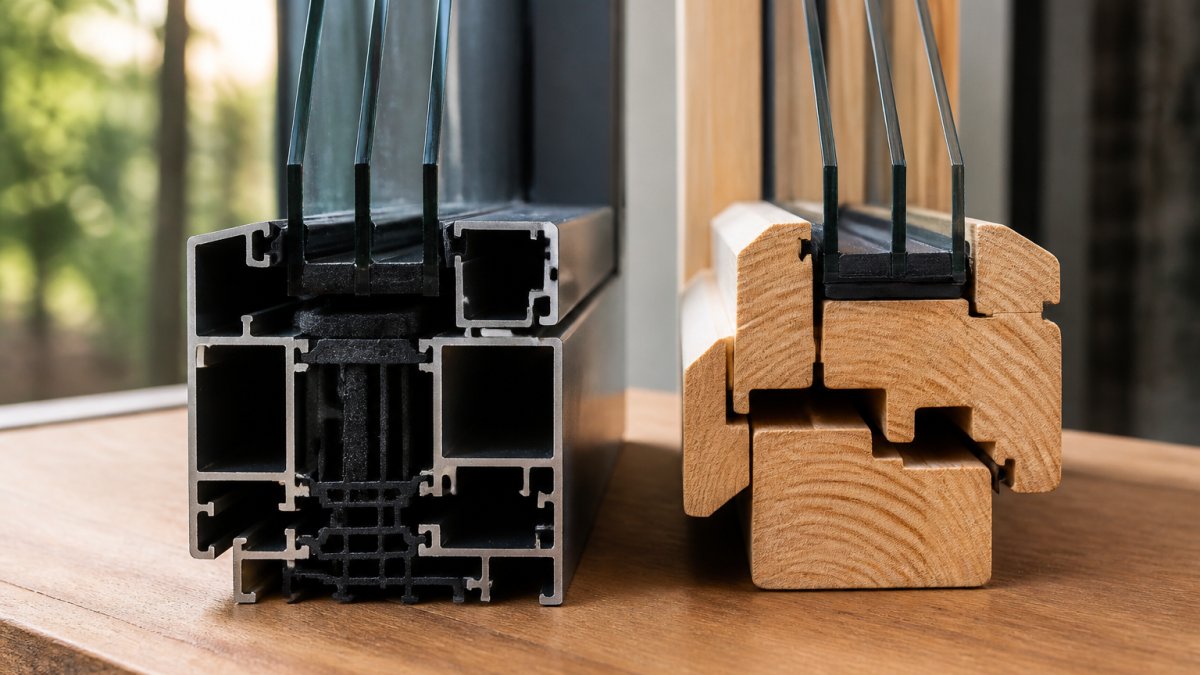
Aluminum frames are lightweight, strong, and low-maintenance; timber frames deliver superior insulation and a warm, traditional look. Modern European systems blur that line with thermally broken aluminum and engineered timber.
Frame material affects heating and cooling bills, though modern engineering has narrowed the gap.
Aluminum conducts heat readily. In non-thermally broken frames, that creates thermal bridging: cold air travels through the frame, bypassing the glazing.
European manufacturers solved this with thermally broken aluminum: a polyamide strip between interior and exterior profiles interrupts the heat pathway.
The IDEAL 7000 from DF Studio NYC uses a hybrid approach: 85mm construction depth, triple glazing up to 51mm, and a glass-fiber reinforced thermoplast core replacing steel reinforcements.

Timber with double glazing typically achieves U-values around 1.0 to 1.2 W/m²K. Aluminum without thermal breaks performs far worse, often 2.0 to 3.0 W/m²K or higher; thermally broken aluminum with triple glazing closes that gap.
In a cold climate, thermally broken aluminum with triple glazing reduces condensation and heat loss nearly as effectively as timber.
Aluminum doesn't rot, warp, or absorb moisture. In coastal or humid environments, it doesn't degrade the way timber can, lasting 50+ years with minimal intervention.
The catch: aluminum needs a protective finish. Powder coating resists corrosion but can fade, chip, or scratch over decades.
Maintenance is simple: clean the frame and drainage channels, check hardware, inspect seals. No repainting every 5-10 years.
Timber is beautiful and thermally superior, but moisture is its enemy.
Repainting is essential: every 5-8 years in moderate climates, every 3-5 years in harsh, humid, or coastal conditions. Skip it and you risk rot, insect damage, and structural failure.
Species matter enormously. European oak and larch are durable and rot-resistant. Softwoods like pine need more frequent maintenance. Better species and stronger initial treatment extend frame life.
| Aspect | Aluminum (Thermally Broken) | Timber |
|---|---|---|
| Moisture resistance | Excellent; no absorption | Good if sealed; vulnerable if neglected |
| Repainting frequency | None required | Every 5-8 years (or 3-5 in harsh climates) |
| Corrosion risk | Low with powder coat | None (but rot risk if wet) |
| Lifespan with proper maintenance | 50+ years | 40-50 years (can extend with care) |
| Maintenance effort | Minimal | Moderate to high |
European design prioritizes slim profiles and large glazed areas. Aluminum enables this better than timber, though engineered timber competes.
The result: larger windows with less frame obstruction. Slim aluminum frames maximize views, while timber needs more material for the same strength, meaning thicker profiles and less glazed area.
For large windows or walls of glass, aluminum's strength advantage is significant. A floor-to-ceiling aluminum system can span wider openings with fewer mullions than timber.
European aluminum systems like ALUPROF offer profile depths from 60mm to 85mm with glazed areas up to 80% of the frame opening.

For maximum transparency and contemporary aesthetics, aluminum wins. For traditional appearance with substantial visible timber framing, timber is the obvious choice.
Aluminum also offers color flexibility: powder coating in virtually any color, plus wood-grain finishes that mimic timber without the maintenance. Timber is limited to natural tones and stains.
In European systems, security and air tightness are hardware and gasket properties first, material properties a distant second. That changes what you should compare when weighing aluminum versus timber.
A European tilt-and-turn sash doesn't lock at one point like a double-hung or casement.
Forced entry therefore requires defeating multiple points at once. Most European systems are tested to EN 1627, with RC1, RC2, and RC3 representing progressively harder targets.
The frame material doesn't determine the security class. An aluminum and a timber tilt-and-turn sash from the same manufacturer often share the same hardware platform, cams, and handle set.
Air tightness comes from a multi-line gasket system, not the frame material.
Gasket material matters. EPDM is standard for exterior lines because it resists ultraviolet degradation and holds compression set well. TPE or silicone is common for interior lines where color stability and low compression force matter.
Air leakage is measured under EN 12207, classifying windows from Class 1 (least tight) to Class 4 (most tight).
Water tightness is governed by EN 12208, classifying performance from Class 1 to Class 9A based on the pressure at which water penetrates.
Aluminum's advantage: the frame doesn't absorb water, so drainage channels stay clear and weep holes don't swell shut.
Wind load resistance is covered by EN 12210, classifying frames from Class 1 to Class 5 based on deflection under positive and negative pressure.
If security and air tightness are priorities, the frame material is the wrong place to start. Start with the hardware platform and gasket system, then confirm your frame material can hold that hardware in alignment over the window's life. Aluminum holds alignment with less maintenance. Timber holds alignment well if the finish is maintained and the species is dimensionally stable. Either can reach the top European performance classes; the difference is what it takes to stay there.
European window design, aluminum or timber, offers advantages over conventional North American designs.
Triple glazing with low-emissivity coatings delivers thermal performance double glazing cannot match.
Engineered seals and gaskets are typically superior to budget alternatives, managing water and air infiltration through multiple redundant barriers.
Aesthetic versatility is another strength. European frames accept many finishes, colors, and hardware options, accommodating both minimal contemporary and traditional appearances.
Cost comparisons usually stop at purchase price, the least useful number. A window is a thirty-to-fifty-year asset, and post-installation costs often exceed the purchase-price difference. This section breaks the comparison into purchase, installation, maintenance, repair, replacement, and end-of-life.
European window pricing is driven by four variables, roughly in this order of impact:
Comparing an aluminum quote to a timber quote without matching glazing, hardware, and profile depth isn't a comparison. It's two different products with two different prices.
Installation cost is similar across frame materials when done correctly, because labor is dominated by the same tasks: preparing the rough opening, setting the frame plumb and level, shimming, fastening, insulating the perimeter gap, and sealing interior and exterior air barriers.
What differs is tolerance for error. European windows rely on the perimeter seal to maintain air and water performance.
The detail that matters most is the sill pan and drainage path. Water reaching the sill must drain to the exterior and must not reach the rough framing.
Aluminum frames with a factory powder coat require cleaning and hardware inspection, but no recoating on a normal schedule.
Timber frames require recoating.
Over fifty years, a timber frame in a moderate climate might see six to ten recoat cycles; in a harsh climate, ten to sixteen.
Timber-aluminum composite frames change this equation. Aluminum cladding faces the weather and carries the finish, so exposed timber is limited to the interior face with far less moisture and ultraviolet exposure.
Individual components are replaceable on both frame types.
Full frame replacement differs. Aluminum frames are typically removed and recycled.
Timber frames can be reused, downcycled into engineered wood products, or used for energy recovery, depending on treatment chemistry and local waste infrastructure.
Embodied carbon is separate. Aluminum production is energy-intensive, and primary aluminum's embodied carbon exceeds timber's.
Build a spreadsheet with these rows for each option:
Discount future costs at a rate you're comfortable with and compare the total. The result depends heavily on climate, maintenance tolerance, and how long you plan to own the building. There is no single lifecycle winner, only a winner for your assumptions, and the only way to find it is to write the assumptions down.
Choose timber if you value traditional aesthetics and superior thermal insulation, and are willing to commit to regular maintenance.
Climate matters. In wet, humid, or coastal regions, aluminum's resistance to moisture-related degradation is a genuine advantage.
Work with a supplier who stocks both materials and can model long-term costs and performance for your situation.
Choosing the right window frame material shapes your home's thermal performance, maintenance requirements, and appearance for decades.
Thermally broken aluminum frames perform comparably to timber when designed with thermal breaks that interrupt heat transfer. European aluminum systems like ALUPROF achieve strong thermal performance through multi-chamber profiles and high-quality glazing. Timber offers natural insulation but requires thicker frames. The difference narrows with modern European designs; the choice depends on your climate and budget rather than material alone.
Timber frames require regular repainting every 5-7 years and are vulnerable to moisture, warping, and rot if not maintained. Aluminum frames are virtually maintenance-free, resisting corrosion and weather without repainting. Coastal exposure accelerates aluminum oxidation but rarely causes structural failure. Timber's ongoing upkeep adds labor costs over the window's lifetime, while aluminum's low maintenance makes it ideal for busy homeowners or contractors managing multiple properties.
Well-maintained aluminum frames typically last 50+ years with minimal degradation. Timber frames can last 40-60 years or more if properly maintained and treated, but neglected timber deteriorates faster due to moisture damage and rot. Aluminum's durability is more predictable and requires less intervention, while timber's longevity depends heavily on climate, maintenance discipline, and wood species selection.
Timber offers superior thermal insulation, aesthetic warmth, and design flexibility that appeals to heritage renovations and luxury projects. The natural appearance and traditional craftsmanship justify the maintenance commitment for homeowners valuing character and environmental credentials. Timber also allows for deep customization in finishes and species. However, this choice requires commitment to a regular maintenance schedule and acceptance of higher long-term costs.
European-style frames, whether aluminum or timber, feature multi-point locking systems and tight sealing that exceed standard North American windows. Tilt-and-turn designs improve air tightness by distributing seal pressure across multiple points. European frames achieve air leakage ratings far below typical standards, reducing drafts and condensation. This design philosophy makes both materials suitable for demanding climates when specified to European performance standards.