My shopping cart
Your cart is currently empty.
Continue ShoppingLast Updated: October 23, 2026
Quick Summary
Durable building materials for contractors combine proven service life, climate suitability, and proper installation to deliver long-term performance and lower lifecycle costs. Selecting by total cost of ownership rather than upfront price prevents premature failures, reduces maintenance burden, and protects project timelines and reputation.
Selecting the right durable building materials for contractors can make or break a project timeline and budget. Material failures don't just cost money, they damage reputation, delay completion, and create liability issues.
Durable building materials for contractors aren't just about picking the strongest option, they're about understanding service life, climate suitability, installation requirements, and total cost of ownership. A material that lasts 40 years in one climate might deteriorate in 10 in another.
This guide covers the categories that matter most, concrete, steel, masonry, roofing, and cladding, and what makes each durable, where it performs best, and what the real cost picture looks like over the building's lifetime.
Concrete is the foundation material for most commercial and residential projects. Reinforced concrete, concrete with embedded steel rebar or mesh, adds tensile strength that plain concrete lacks, making it suitable for structural elements that experience bending or tension loads.
Concrete durability depends on mix design, water-to-cement ratio, and environmental exposure. A slab in a dry interior basement will outlast the building; the same concrete exposed to freeze-thaw cycles can spall and crack within 15 years if not properly specified.
Air entrainment, tiny air bubbles intentionally introduced into the mix, is critical for freeze-thaw resistance. When water freezes inside concrete it expands; air voids provide space for that expansion without cracking the matrix. Skipping it in cold climates guarantees premature failure.
Strength class matters too: a driveway exposed to vehicle loads and salt needs higher compressive strength than a protected foundation wall. Specifying it upfront prevents overdesign (wasted cost) and underdesign (premature failure).
Reinforced systems also depend on concrete cover, the thickness of concrete around the rebar. Insufficient cover lets water and chlorides penetrate and corrode the steel, causing spalling. Codes specify minimum depths, but exceeding them dramatically extends service life in corrosive environments.
Steel delivers high tensile strength in a compact form, critical for long spans, cantilevers, and heavy loads. It doesn't rot, resists insects, and holds its properties across temperatures, but its durability depends entirely on corrosion protection.
Bare steel corrodes aggressively, especially in humid or coastal environments, a structural member can lose 1-2 millimeters of thickness per year in unprotected coastal exposure. Treating corrosion protection as optional creates future liabilities.
Paint systems, galvanizing, and weathering steel are the main protection strategies.
Weathering steel (Corten) develops a stable rust layer that protects the underlying material and needs no maintenance, but it only works in dry or alternating wet-dry cycles. In constantly wet or submerged conditions, it fails like any unprotected steel.
Recycled steel is structurally identical to virgin steel, recycling doesn't degrade the material, so it offers the same service life at a lower environmental cost.
Metal roofing systems, whether steel, aluminum, or copper, offer decades of service life with minimal maintenance. The Worthouse Metal Roofing ULTA system we stock delivers modular metal roof tiles with pre-drilled holes for fast installation and lasting protection.

Masonry materials, brick, concrete block, natural stone, and pavers, have been proven by centuries of use; historic masonry buildings still stand after 300+ years. Modern failures are usually caused by installation mistakes rather than material limitations.
Brick durability depends on clay source and firing temperature. Hard-fired brick from quality producers resists freeze-thaw damage; soft or underburned brick absorbs moisture and deteriorates quickly in northern climates. Source from established suppliers with consistent quality.
Mortar is where most masonry failures originate. The joint is sacrificial, designed to fail before the brick.
Masonry veneer, thin brick or stone over a backup wall, requires proper drainage plane design. Water that penetrates the veneer must drain out, not accumulate behind it; skipping drainage planes creates hidden moisture problems that emerge years later.
Natural stone, granite, limestone, slate, offers aesthetic appeal and genuine durability, but selection matters.
Stone pavers need proper base preparation: on sand they shift and settle unevenly, while on a compacted stone base with proper drainage slope they remain stable for decades. Installation method determines durability as much as the material.
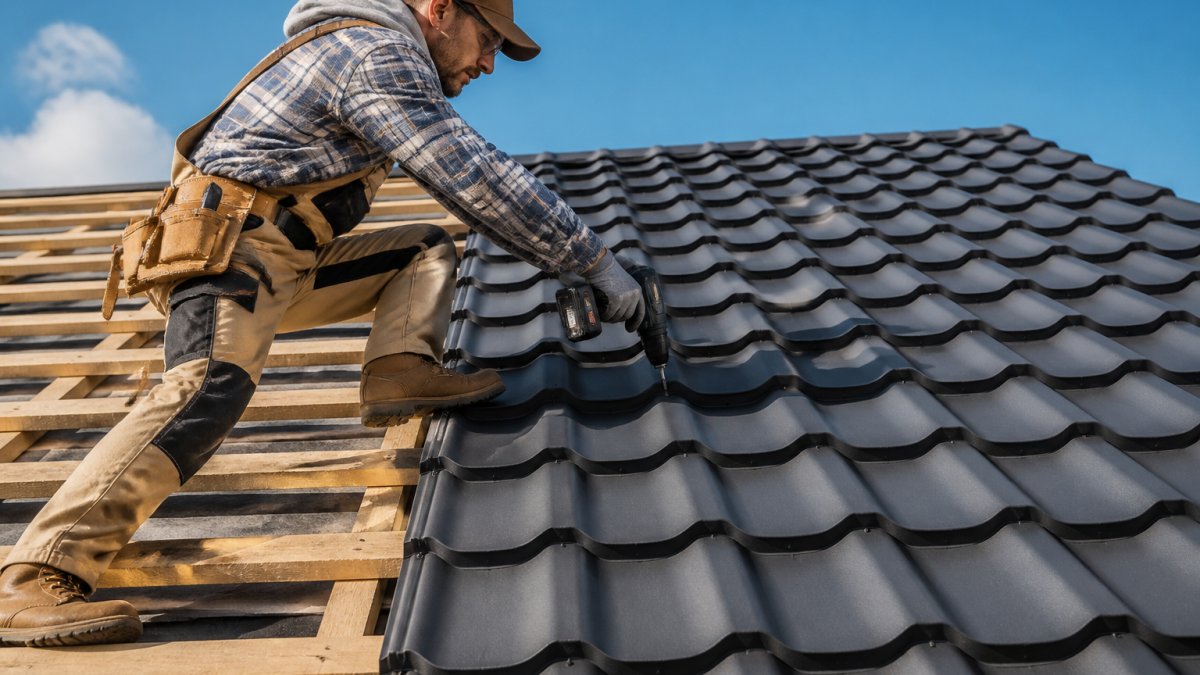
Roofing directly protects everything underneath; failure means water intrusion, structural damage, and interior damage. Selecting durable roofing materials is non-negotiable.
Asphalt shingles are the most common residential roofing but the least durable: standard shingles last 15-25 years, premium 25-40, and all eventually degrade from UV, thermal cycling, and weather.
Metal roofing delivers 40-70 year service life with minimal maintenance. The Quarrix Composite Roofing system offers composite roofing that combines durability with aesthetic options.

Slate and clay tile offer 75-100+ year service life, they're essentially inert and don't degrade from UV, weather, or thermal cycling.
Exterior cladding protects the wall assembly from weather while providing aesthetic finish.
Fiber cement siding, cement, sand, and cellulose fibers, offers the wood look without the maintenance burden.
Engineered wood cladding like AZEK Cladding uses capped polymer technology to combine real wood appearance with plastic durability.
New Tech Wood Shadowline Siding offers another engineered option, with shadow-line profiles that create visual depth and architectural interest.
Metal panels, aluminum or steel, offer industrial aesthetics and genuine durability, resisting weather, fire, and impact.
Contractors who buy durable building materials for contractors in volume face different challenges than homeowners making one-off purchases: supplier reliability, lead times, and consistency all matter.
Establish relationships with suppliers who stock the materials you use regularly.
Specify materials by performance standard, not just product name. Instead of "cement mortar," specify "Type S mortar per ASTM C270." Instead of "concrete," specify "4,000 PSI concrete with air entrainment per ACI 318." These specifications ensure consistency across suppliers and projects.
Request material certifications and test reports: slump, compressive strength, and air content from concrete suppliers; mill test reports from steel suppliers; material test data from masonry suppliers. These prove the material meets specification and protect you if problems emerge later.
Negotiate volume discounts but understand the cost drivers, transportation, handling, and installation labor vary by supplier. A supplier 50 miles away might cost less per unit but more in total.
For specialized materials, European windows, doors, microcement, terrazzo, sourcing reliability becomes critical. These aren't stocked at every lumber yard; a supplier who consistently sources them and understands installation requirements prevents delays and failures.
The lowest upfront cost rarely delivers the lowest total cost. A material that costs 30% less but lasts half as long costs more over the building's lifetime; evaluating by lifecycle cost leads to better selections.
Calculate lifecycle cost by dividing total cost (material + installation + maintenance + replacement) by service life in years. A material that costs $10,000 installed and lasts 20 years costs $500 per year. A material that costs $15,000 installed and lasts 40 years costs $375 per year. The more expensive option is actually cheaper over time.
Maintenance costs vary dramatically: wood siding needs painting every 5-10 years, engineered cladding needs none, steel needs corrosion protection, concrete needs sealing in harsh environments, and stone needs periodic cleaning and sealing. Factor these ongoing costs into your selection.
Replacement costs are often hidden: when roofing fails, you pay labor to remove, dispose, and reinstall, often 50-60% of total replacement cost. A material that lasts 40 years instead of 20 saves an entire replacement cycle.
Environmental cost and embodied carbon increasingly matter to owners and designers. Recycled steel, sustainably harvested timber, and long-service-life materials reduce impact, and contractors who understand this can position themselves as environmentally responsible while delivering durable buildings.
| Material | Typical Service Life | Maintenance Requirement | Relative Lifecycle Cost |
|---|---|---|---|
| Asphalt shingles | 15-25 years | Minimal | High (frequent replacement) |
| Metal roofing | 40-70 years | Minimal | Low |
| Engineered cladding (AZEK) | 30-40+ years | None | Low |
| Wood siding | 20-30 years | Periodic painting/staining | Medium-High |
| Fiber cement | 25-40 years | Minimal | Low-Medium |
| Reinforced concrete | 50+ years | Sealing in harsh environments | Low |
| Structural steel (galvanized) | 50+ years | Inspection only | Low |
| Natural stone veneer | 75+ years | Periodic cleaning/sealing | Low |
Hardware and fasteners are the connective tissue of construction, a durable building falls apart if the fasteners fail. Treating hardware selection as an afterthought creates reliability problems.
Stainless steel fasteners cost 3-5 times more than galvanized, but in coastal or high-moisture environments they don't corrode while galvanized fasteners rust and fail. For permanent installations, stainless is the durable choice.
Flashing, the metal components directing water away from penetrations and transitions, is critical for envelope durability. Improper flashing causes water intrusion that damages framing, insulation, and interior finishes.
Sealants degrade over time: silicone lasts 10-20 years before cracking and losing adhesion, polyurethane 15-25. High-movement applications need flexible sealants; stable ones work fine with rigid caulks.
Installation tools directly affect material durability: a concrete saw with a worn blade generates heat that damages concrete, and a nail gun set too hot can split wood.
DF Studio NYC stocks professional-grade hardware and tools for contractors who demand reliability, from fasteners and flashing to specialized finishing materials, because contractor success depends on availability, consistency, and technical support.
Selecting durable building materials for contractors requires understanding service life, environmental exposure, installation requirements, and total cost of ownership.
DF Studio NYC provides contractors with proven durable materials, from reinforced concrete systems and metal roofing to engineered cladding and professional-grade hardware.
Concrete, reinforced steel, natural stone, and fiber cement deliver the longest service life for exterior applications. Concrete and masonry resist weather and freeze-thaw cycles well in cold climates. Metal roofing and composite cladding like AZEK provide 40+ years of durability with minimal maintenance. Selection depends on climate exposure, UV intensity, and moisture conditions specific to your project location and design requirements.
Bulk purchasing reduces per-unit cost and secures material availability for large residential and commercial projects. Bulk orders also simplify logistics and reduce multiple shipments. However, storage space and cash flow timing must be planned carefully to avoid waste or project delays.
Fiber cement cladding, metal roofing, and composite materials like AZEK require minimal upkeep compared to traditional timber or masonry. These materials resist rot, insect damage, and UV degradation without painting or sealing. Concrete and reinforced concrete systems are maintenance-heavy only if water infiltration occurs; proper installation and drainage prevent most issues. Natural stone and brick need periodic repointing but remain stable for centuries.
Request certification documentation from your supplier before purchase. Building materials must comply with the International Building Code (IBC) and local amendments. Metal roofing, concrete systems, and exterior cladding should carry third-party testing reports showing fire resistance, impact resistance, and weather performance ratings. DF Studio NYC provides technical documentation and installation guidance for all products to ensure compliance with building department requirements in your area.
