My shopping cart
Your cart is currently empty.
Continue ShoppingLast Updated: October 14, 2026
The materials you choose determine whether a small renovation, repair, or DIY project lasts five years or fifty.
Cutting corners on materials costs far more in labor and frustration than buying right upfront.
Small projects demand materials that work at smaller scales, perform in variable conditions, and don't require specialized equipment. This guide covers reliable building materials for repairs, renovations, and DIY work, and how to spot quality without overpaying.
Concrete repair and masonry form the backbone of durable construction. When cracks, deteriorating mortar joints, or damaged surfaces appear, the repair material you choose determines how long the fix lasts.
For structural repairs that need to hold, high-strength repair mortars are essential. The American Concrete Institute establishes standards for repair materials that ensure they bond properly to existing concrete and resist the same stresses the original material faces. Products engineered for structural use, like Velosit RM 203, a high-strength cementitious repair mortar, deliver the bond strength and durability that casual patching compounds simply cannot match.

For tile installations and surface prep, polymer-modified thin-set mortars provide reliable adhesion across substrates. Bostik's Porcelain-Mate and PM Thin Set systems bond porcelain, ceramic, and natural stone to concrete, wood, and existing flooring, with polymer modification that enhances adhesion versus standard Portland cement on substrates that move or see moisture.
Reliable masonry depends on substrate preparation and material selection together: a premium mortar on a poorly prepared surface will fail, while quality material on a properly cleaned and primed surface lasts decades.
DIY projects succeed or fail based on whether you choose materials rated for the conditions they'll actually face, the difference between products designed for temporary use and those engineered for long-term durability.
Expanding polyurethane foam fills gaps around windows, doors, and penetrations, but not all foam is equal.
For sealing transitions around windows and doors, flashing tape prevents water intrusion that leads to rot, mold, and structural damage.
When patching surfaces before finishing work, whether a patch telegraphs through paint depends on material quality. Bostik UltraFinish Pro accepts many floor coverings in as as little as 15 minutes, and its moisture-insensitive, re-temperable formula lets you adjust workability without adding water.

| Material Type | Best For | Key Durability Factor | Common Failure Point |
|---|---|---|---|
| Structural repair mortar | Concrete cracks, spalling | Bond strength rating | Improper substrate prep |
| Thin-set mortar | Tile installation | Polymer modification | Wrong substrate type |
| Expanding foam | Air sealing, gaps | Temperature range | Over-expansion, compression |
| Flashing tape | Window/door sealing | Adhesive temperature range | Moisture under tape |
| Surface patch | Flooring prep | Moisture resistance | Premature coating application |
Affordability and reliability aren't opposites, they're a balance.
A practical comparison is a cost-per-year figure: purchase price plus delivery and consumables, divided by expected service life. That math usually favors the professional-grade product.
A 50-pound bag of Bostik Porcelain-Mate thin-set mortar costs around $19.99 and covers roughly 100 square feet of tile, economical for small projects where a full pallet isn't practical.
When budget is tight, prioritize durability in high-stress areas. Resisto All-Weather Flashing Tape at $47.90 per roll protects thousands of dollars in window and door installations, and Bostik UltraFinish Pro at $89.99 per unit ensures the patch holds so your floor covering installation succeeds.

For hand tools, stainless steel putty knives and margin trowels from EcoFirm Tools deliver durability without premium pricing.
Most overspending on small projects comes from three places, not the material price itself:
A rough estimating routine keeps small projects from becoming storage problems:
A material requiring a specialized tool you'll use once is rarely affordable. Water-activated and pre-mixed products need nothing beyond a trowel and bucket; mixing paddles, dispensing guns, and primers add purchase and setup steps.
The real savings come from materials that work at smaller scales without forcing bulk purchases, and from estimating closely enough that what you buy is what you install.
Sourcing reliable materials for small projects means finding professional-grade products in smaller quantities and verifying quality before installation, a product can be correctly specified and still arrive compromised.
DF Studio NYC stocks professional building supplies for projects from single repairs to full renovations. A specialized supplier offers materials engineered for durability, and understands a one-bag or one-roll purchase better than a retailer optimized for bulk volume.
Reliability is a property you can check, not a claim you have to trust. Before the material leaves the counter:
Wood is most often bought on appearance alone, and appearance is a poor guide. When selecting lumber:
Fasteners are cheap relative to the assembly they hold and are the most common hidden failure point. Match the fastener to the material and exposure: use coatings rated for treated lumber and exterior use, avoid mixing metals in ways that promote corrosion, and for structural connections follow the connector manufacturer's specified fasteners.
Inspect materials immediately against what you ordered: concrete repair mortars should be uniform in color with no lumps, tape should unroll smoothly, and foam should spray consistently. Catching a problem at delivery is far cheaper than after installation.
Ask suppliers about technical support. When unsure about substrate preparation or application, a supplier with product expertise can guide you. DF Studio NYC provides technical documentation and installation guidance for every product.
Small projects don't mean buying small quantities from the wrong supplier. Strategic bulk purchasing saves money when you plan ahead and store materials properly.
The challenge is storage. Concrete mortars and adhesives need dry, temperature-controlled conditions; tape and foam need protection from heat and sunlight.
DF Studio NYC offers smaller package sizes for DIY and small-scale professional projects without forcing full-pallet commitments, letting you buy professional-grade materials without storage complications.
Materials are only as good as the tools that install them.
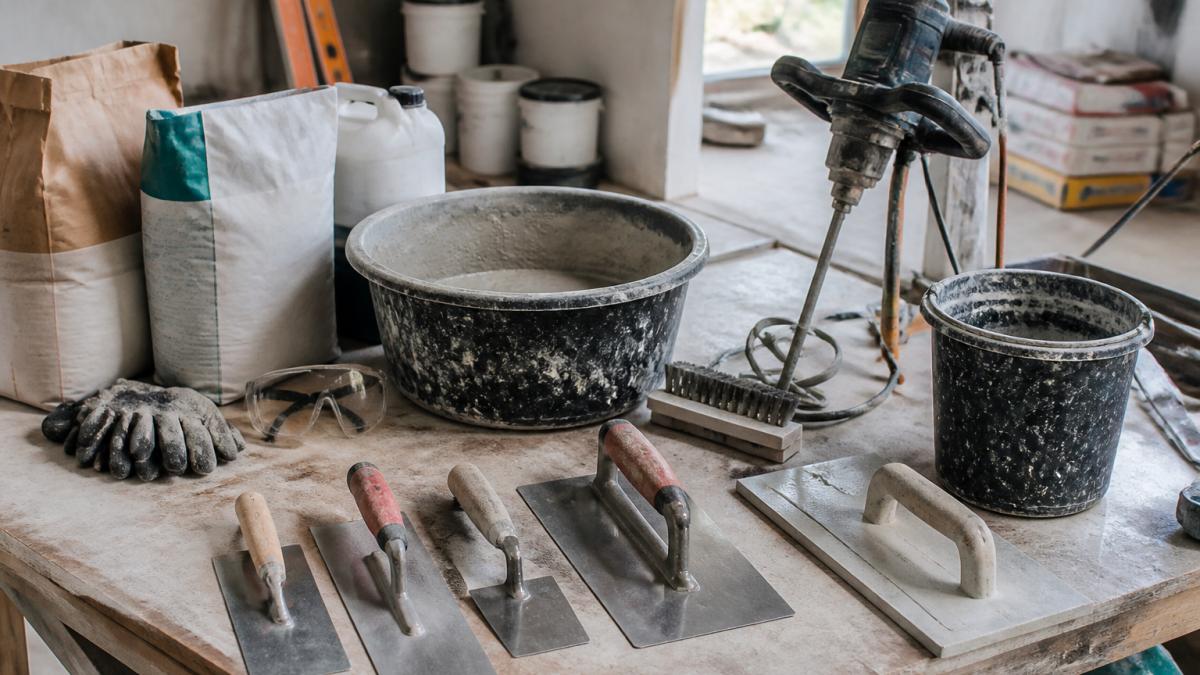
Hand tools determine whether surface prep and finishing produce professional results.
The EcoFirm Margin Trowel at $32.52 is designed for small-area work and form cleanup that standard trowels handle awkwardly.
For leveling and alignment, precision matters.
Quality tools reduce installation time, improve accuracy, and last through dozens of projects.
Reliable building materials for small projects come down to matching specifications to actual use conditions, buying from suppliers who understand professional-grade products, and using proper tools. DF Studio NYC provides the full range, from structural repair mortars like Velosit RM 203 to Bostik UltraFinish Pro, flashing tape, and professional-grade hand tools. Source materials engineered for durability and apply them with proper technique, and small projects become lasting solutions instead of temporary fixes.
Reliable building materials hold up under stress, maintain their properties over time, and perform consistently across different conditions. Quality concrete repair mortars like Velosit RM 203 are high-strength structural repair mortars. Check product certifications, test coverage data, and read technical specifications before buying. Materials from established suppliers tend to have better quality control than bargain options.
Compare unit prices across material types and suppliers. Bostik Porcelain-Mate thin-set mortar at $19.99 for a 50-pound bag offers professional-grade performance at economical cost. Buy only what you need to avoid waste; many retailers sell smaller quantities. Check if materials like Soudafoam Gap Fill ($20.99) can handle multiple repair types on your project, reducing the total number of products you purchase. Quality doesn't always mean expensive, it means appropriate for the job.
For small projects, bulk buying often means purchasing slightly larger package sizes rather than industrial quantities. A 50-pound bag of mortar covers more area than multiple small boxes, reducing per-unit cost. Calculate your exact coverage needs first using product data sheets. DF Studio NYC stocks professional-size packages designed for contractors and homeowners doing multiple small jobs. Buying one larger bag beats buying three smaller ones if you have storage space and the material won't expire.
Purchase from established suppliers with verified inventory and clear product documentation. DF Studio NYC provides technical data sheets, safety information, and installation guides for all products, confirming authenticity and helping you use materials correctly. Avoid unmarked or heavily discounted materials from unclear sources, they may be counterfeit or expired. Check that the supplier stocks the exact product version you need, especially for specialized items like European-grade components or specific mortar formulations.
Looking to source reliable materials for your next project? DF Studio NYC stocks professional-grade building supplies engineered for durability, including structural repair mortars, thin-set systems, flashing tape, foam sealants, and precision tools. Visit DF Studio NYC to explore our complete inventory and access technical support for your project specifications.