My shopping cart
Your cart is currently empty.
Continue ShoppingLast Updated: October 1, 2026
European style windows have moved from a niche import to a mainstream specification in American renovation work because they solve problems standard domestic units handle poorly. At DF Studio NYC, we supply these systems, and the questions we field have shifted from "what are these?" to "how do I install and maintain them?", a sign the category has matured.
Energy efficiency is the headline benefit, and it rests on two numbers every contractor should read off a spec sheet.
A lower U-value means less heat loss in winter and less heat gain in summer, reducing load on your HVAC system. When comparing quotes, ask for the whole-window U-value, not the center-of-glass number, the difference is where most real performance lives.
Thermal bridging happens when a conductive material, usually an aluminum frame or metal spacer, creates a path for heat to bypass insulation. European frames address this with thermal breaks and warm-edge spacers. Airtightness is the other half: excellent glazing with leaky weatherstripping still lets moisture and cold air through. The building envelope only performs as well as its weakest joint.
The tilt-and-turn mechanism separates European windows from a standard American casement and changes how a room functions daily. A casement swings outward on a hinge; a tilt-and-turn unit tilts inward at the top for ventilation and swings fully inward for cleaning and egress.

Triple pane window benefits extend well beyond the energy bill, and the acoustic piece is the one American buyers underestimate until they live with it. A third pane with argon fill and a low-e coating adds an insulating cavity that reduces heat transfer and sound transmission, but the reduction depends on glass thickness, cavity width, and assembly asymmetry, not just pane count.
In the U.S., acoustic performance is rated two ways. STC (Sound Transmission Class) measures how well an assembly blocks airborne sound across a broad frequency range, with higher numbers meaning more attenuation. OITC (Outdoor-Indoor Transmission Class) weights low-frequency noise, traffic, rail, and aircraft, more heavily, which makes it the more honest number for a home near a road or rail line.
A detail most guides skip: two panes of identical thickness resonate at the same frequency and pass more sound than mismatched thicknesses. European manufacturers often pair a 4 mm outer pane with a 6 mm or laminated inner pane to break that coincidence. If one triple-pane quote is noticeably cheaper, check whether the glass thicknesses are symmetric, that is frequently where cost was cut.
Condensation resistance is the underrated benefit: a warm interior surface stays above the dew point, so moisture forms on the glass far less often, reducing conditions that feed mold at the frame and sill. Comfort follows, the interior pane stays warmer in winter, so you don't feel a draft radiating off the glass. That same warm surface is why triple-pane units feel quieter in a way hard to attribute to a single number.
Security is where European windows outperform most domestic units by a wide margin. A European multi-point locking system engages the frame at several points along the perimeter, top, bottom, and sides, when you turn the handle. Hardware durability matters too: the mechanism is only as good as the gearbox and handle driving it, which is why sourcing replacement parts from a consistent supplier pays off.
European window installation best practices differ from what most American crews are trained on, and the gap causes most callbacks. These units install as a complete system with a subframe and rely on precise, level rough openings, tolerances are tighter than for a flanged domestic window.
IDEAL 4000 - European Tilt and Turn →
Retrofitting into an existing opening is harder. Older American rough openings are rarely square, and the depth may not fit a European frame plus subframe. New construction lets you size the opening correctly and integrate the air barrier cleanly; in a retrofit, expect to build out or adjust the opening and budget for trim work on both sides.
| Scenario | Main Challenge | Best Approach |
|---|---|---|
| New construction | Coordinating air barrier | Size opening to subframe, integrate barrier |
| Retrofit, square opening | Depth and trim | Use subframe, adjust interior trim |
| Retrofit, out-of-square | Frame distortion risk | Rebuild opening before setting frame |
Maintenance and logistics are the topics most guides skip, and they are where owners get surprised, the part of the decision that happens after the sale, and where the practical difference between a European system and a domestic one shows up most clearly.
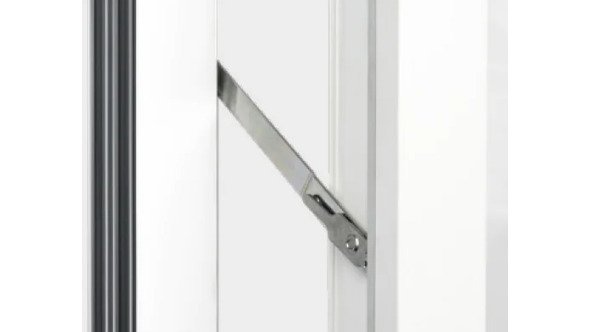
Tilt-and-turn hardware is a mechanical system with wear points.
Handles, gearboxes, corner drives, and limiters are specific to the hardware system and not interchangeable across brands, a handle that fits one manufacturer's gearbox will not fit another's, even if the mounting holes line up.
European units are heavy, travel as freight, and clear customs on arrival.
The practical takeaway: plan orders around your project schedule rather than assuming next-week delivery. For a renovation, order windows before demolition begins; for new construction, lock the order before framing is complete so rough openings can be sized to the subframe. Lead time is the constraint most likely to move a project date, and the easiest to manage by ordering early.
The tilt and turn mechanism allows full ventilation without losing the sash, and multi-point locking systems engage the frame at several points rather than one latch. Triple-pane glazing with argon gas fill and low-e coating is standard in many European models, which reduces heat loss and outside noise. Most European windows are custom-sized and imported.
Tilt and turn windows offer two opening modes from a single handle. The tilt position opens the top of the sash inward for controlled ventilation without leaving a large opening, which helps with child safety and rain protection. The turn position swings the sash fully inward for cleaning both sides from inside the room. This dual function also means better airtightness when closed, because the sash pulls tight against the frame with multi-point hardware rather than resting on a single hinge line.
European windows reduce heat loss through several design choices: triple-pane glazing with argon gas fill, low-e coatings that reflect radiant heat, warm-edge spacers that cut thermal bridging at the glass edge, and multi-chamber frames that slow heat transfer. Airtightness also matters, since tilt and turn sashes compress against weatherstripping at multiple points. In colder U.S. climate zones, these features lower heating demand. In warmer zones, the solar heat gain coefficient of the glazing package determines how much solar heat enters the home.
Hardware care matters. Lubricate the multi-point locking system and hinges once a year with a silicone-based spray. Clean the weatherstripping with mild soap and water, then apply a thin coat of silicone grease to keep it pliable. Check that the sash still compresses evenly against the frame; if it does not, the hardware may need adjustment. Replacement handles and child locks are available separately.
Specifying European windows is a decision that rewards planning over speed. The performance gains in energy efficiency, sound control, and security are real, but they depend on correct installation, matched hardware, and realistic lead times. DF Studio NYC supplies the full system, from tilt-and-turn units and triple-pane options to the handles, limiters, and hardware that keep them working for years. Browse the European windows and doors collection to match the right unit to your next project.